


Holiday Traditions Around the World (And How to Experience Them)
December might share a season on the calendar, but around the world it feels completely different from place to place. Some cities glow with Christmas markets and mulled wine. Others celebrate with lanterns, drums, midnight parades, or candlelit processions through the snow.
These traditions are more than festive fun. They are living expressions of history, faith, and community, and they give travelers a chance to step into the story instead of just watching from the sidelines. Below are some of the most memorable December and early January celebrations and how you can experience them yourself on your next vacation.
European Christmas Markets: Old-World Holiday Magic
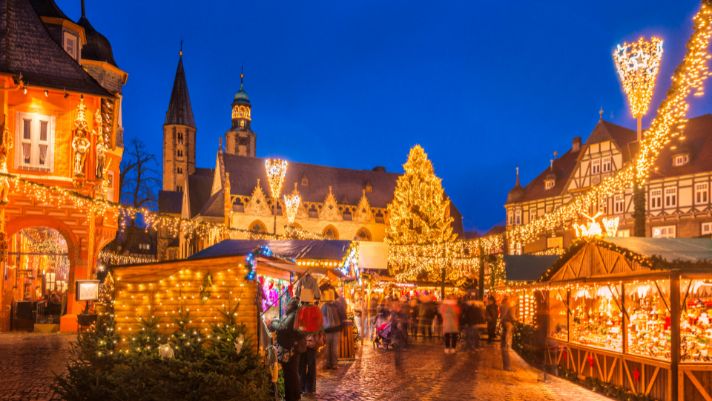
Origin and significance: Christmas markets began as winter fairs in medieval Europe, where townspeople gathered to buy food, gifts, and supplies before the coldest months. Records go back as early as the 13th century in cities like Vienna. Today, Christmas markets are an international phenomenon, but the heart of the tradition still beats strongest in Europe.
Walk into a traditional market and you will see rows of wooden stalls, smell roasted nuts and gingerbread, and hear carols echoing through historic squares. Local artisans sell ornaments, wooden toys, candles, and regional specialties, while steaming cups of mulled wine (Glühwein) keep everyone warm.
How to experience it: If you dream of a storybook holiday season, plan a December trip to cities such as Nuremberg, Vienna, Strasbourg, Prague, or Budapest. Each city has its own signature market, usually set in the old town square or near a cathedral.
To see several markets in one trip without constant unpacking, consider a Christmas market river cruise along the Rhine, Main, or Danube. These itineraries are timed for Advent and make it effortless to hop from one festive town to the next. By day, you explore cobblestone streets and market stalls. By night, you sail along illuminated riverbanks, often with hot drinks and holiday treats onboard.
Hanukkah: The Jewish Festival of Lights
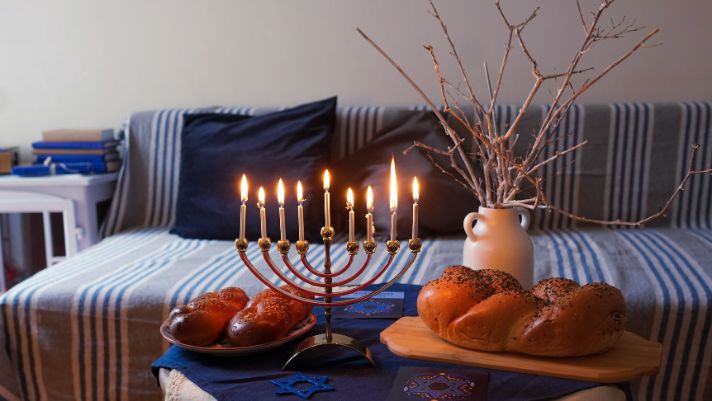
Origin and significance: Hanukkah, which means “dedication” in Hebrew, commemorates the rededication of the Second Temple in Jerusalem in the 2nd century BCE after the Maccabean revolt. Tradition tells of a miracle: oil that should have lasted only one day kept the temple menorah burning for eight nights.
To remember this, Jewish families light a menorah for eight nights, adding one candle each evening. The ritual is accompanied by blessings, songs, games like dreidel, and delicious fried foods such as latkes (potato pancakes) and sufganiyot (jelly donuts). It is a joyful holiday focused on resilience, light, and hope in the darkest part of the year.
How to experience it: Visitors can experience Hanukkah in many cities around the world. Large public menorah lightings take place in New York’s Central Park, London’s Trafalgar Square, and major plazas in cities with sizable Jewish communities. These events usually include music, speeches, and free treats.
In Israel, Hanukkah has a special atmosphere. In Jerusalem and other cities, families place menorahs in windows or outside their doors, so entire streets shimmer with candlelight. A large menorah is lit near the Western Wall on the first night, drawing locals and visitors together. To go deeper, look for cultural or heritage tours that include Hanukkah experiences, visits to Jewish museums, and tastings of traditional foods. Whether you are trying sufganiyot at a Tel Aviv bakery or joining a public candle lighting in Europe or North America, you will find Hanukkah celebrations welcoming and warm.
Kwanzaa: Honoring African Heritage and Community
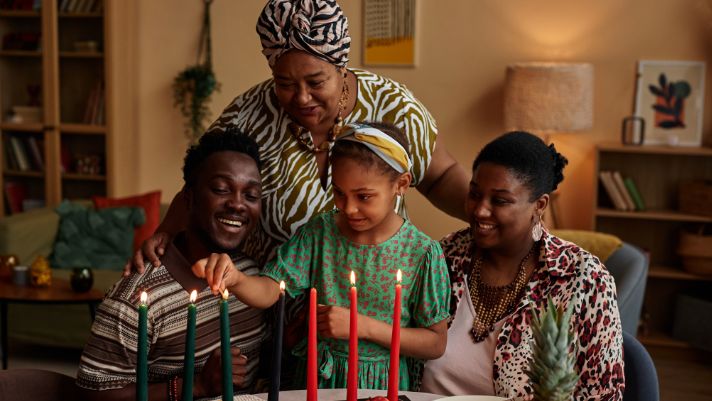
Origin and significance: Kwanzaa is a week-long cultural celebration that runs from December 26 through January 1. Created in 1966 by Dr. Maulana Karenga in the United States, it was designed to honor African heritage and affirm values of community, self-determination, and collective responsibility.
The holiday centers on seven principles, the Nguzo Saba, such as unity (umoja), purpose (nia), and faith (imani). Families light a candle on a seven-branched kinara each night, discuss that day’s principle, and often share stories, music, and traditional foods. The celebration is non-religious and open to people of all faiths or none, but it is deeply rooted in African and African American culture.
How to experience it: Kwanzaa is widely celebrated across the African diaspora, especially in the United States. Travelers can join public events at museums, cultural centers, libraries, and community organizations in cities like Los Angeles, Chicago, New York, Washington, D.C., and Atlanta.
Typical celebrations include African drumming and dance, spoken-word performances, art exhibits, and communal candle lighting. Many events are specifically designed to teach visitors about Kwanzaa’s history and principles, so even if you are new to the holiday, you will feel included. If you find yourself in a major U.S. city at the end of December, check local event calendars for Kwanzaa programs and consider attending a community feast or cultural showcase.
St. Lucia Day in Sweden: A Procession of Light
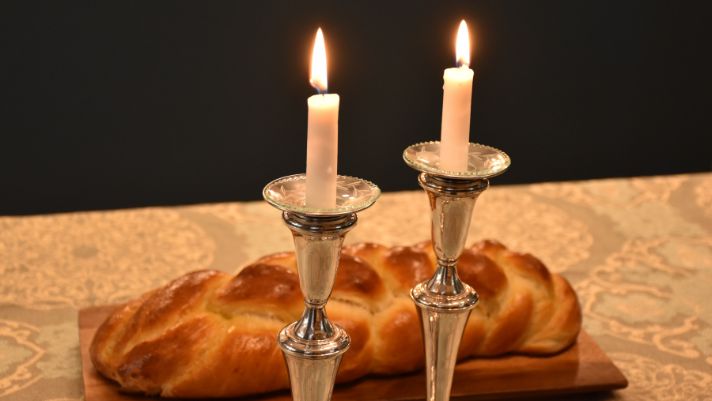
Origin and significance: On December 13, in the depths of Scandinavian winter, Swedes celebrate St. Lucia Day, or Luciadagen. The tradition combines Christian reverence for St. Lucia, a 3rd century martyr associated with light, with older Nordic customs that welcomed the return of longer days around the winter solstice.
In modern celebrations, a girl chosen as “Lucia” wears a white gown and a crown of candles, leading a procession of children in white robes through churches, schools, and town squares. They sing Lucia songs and carry candles, filling the darkness with soft music and light. At home, the eldest daughter may wake early to serve saffron buns (lussekatter) and coffee to her family, also dressed as Lucia.
How to experience it: Stockholm, Gothenburg, and other Swedish cities host beautiful Lucia concerts in churches, museums, and public venues. Tickets for the most popular events (such as those in Stockholm’s grand churches) often sell out, so it is wise to book ahead if you know your travel dates.
You can also find smaller, more informal processions in local communities, schools, and hotels. If you are in Sweden around December 13, ask at your hotel or the local tourist office about Lucia events. Standing in a darkened church or courtyard as a candlelit choir enters singing is a quietly magical moment and a memorable way to experience Swedish culture at the start of the Christmas season.
Las Posadas in Mexico: Walking with Mary and Joseph
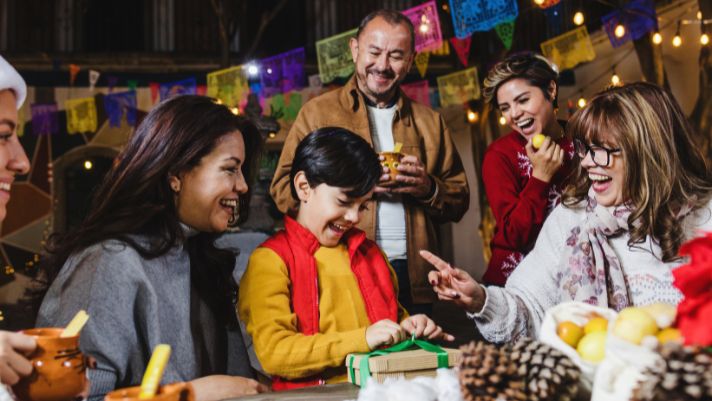
Origin and significance: Las Posadas is a beloved Mexican tradition that takes place on nine nights from December 16 to 24. It reenacts the journey of Mary and Joseph to Bethlehem and their search for a place to stay before the birth of Jesus.
Each evening, a procession moves through the neighborhood, with participants carrying candles and images of Mary and Joseph. They stop at different homes, singing call-and-response songs that represent Mary and Joseph asking for shelter and the “innkeepers” initially turning them away. At the final house, doors are opened, the pilgrims are welcomed inside, and the evening turns into a party with prayer, carols, food, and often a star-shaped piñata that represents the Star of Bethlehem.
How to experience it: Las Posadas are community events, so the best way to experience them is by staying in or near historic neighborhoods in cities like Mexico City, Oaxaca, San Miguel de Allende, or small colonial towns. Local churches and cultural organizations often organize public processions, and hotel concierges or tourism offices can usually point you to one.
As a visitor, you are welcome to walk along, sing if you know the words, and join in the celebration at the end. Expect homemade ponche (hot fruit punch), tamales, sweet breads, and lots of children eagerly waiting for the piñata. It is a beautiful mix of faith and festivity, and a very personal way to experience Christmas in Mexico.
Winter Solstice at Stonehenge: Sunrise with the Ancients
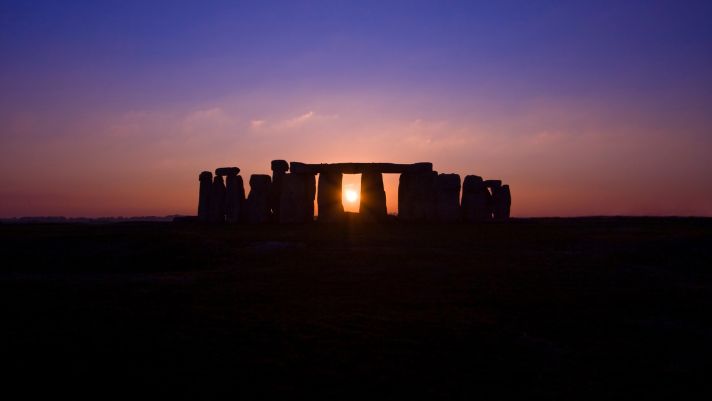
Origin and significance: Long before modern winter holidays, many cultures marked the shortest day of the year, the winter solstice, as a turning point when light begins to return. Stonehenge in England is one of the most famous ancient sites aligned with the solstices. At winter solstice sunrise, the sun rises in a way that aligns precisely with certain stones, suggesting that Neolithic people used the site to mark this moment.
Today, modern Druids, pagans, and thousands of curious visitors gather at Stonehenge to greet the solstice sunrise. It has become both a spiritual observance and a unique cultural event, linking contemporary visitors with rituals that go back thousands of years.
How to experience it: On or near December 21, English Heritage allows special access to the stone circle at dawn for winter solstice. Entry is free, although parking and transport may have fees, and the site can be very crowded. You will need to arrive very early and dress for cold, damp weather.
As the sky begins to lighten, people sing, drum, or quietly reflect inside and around the stones. When the sun finally breaks the horizon, the crowd often cheers. Even if you are not attending for spiritual reasons, seeing the sunrise framed by such an iconic monument is a powerful experience and a very different kind of December celebration.
Junkanoo in The Bahamas: Music, Color, and Carnival Energy
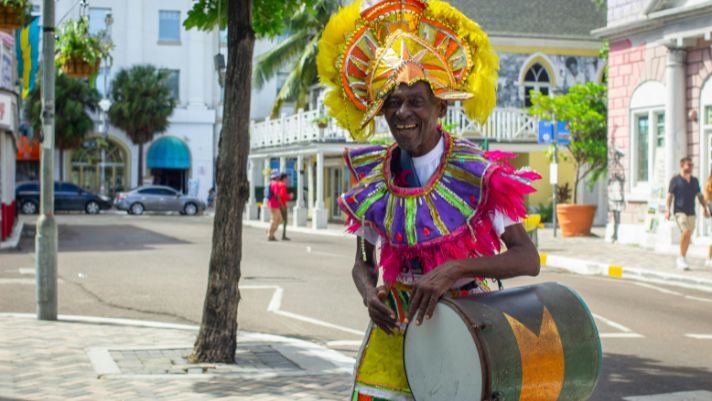
Origin and significance: Junkanoo is the Bahamas’ most famous festival, held in the early hours of Boxing Day (December 26) and again on New Year’s Day. Its roots date back to the days of slavery, when enslaved Africans were allowed time off around Christmas and used it to celebrate with music, dance, and costumes. Over time, those celebrations evolved into today’s highly organized, fiercely proud Junkanoo parades.
Competing groups spend months preparing elaborate costumes and floats made of cardboard, crepe paper, feathers, and sequins. On parade night, they rush through the streets to the intense beat of drums, cowbells, horns, and whistles, dancing and performing choreographed routines. Junkanoo is both a competition and a celebration of Bahamian identity.
How to experience it: Nassau hosts the largest and most famous Junkanoo parades. If you are visiting over Christmas or New Year, plan to stay up late or wake up very early and head to Bay Street in the city center. You can watch from the sidewalk or purchase bleacher seats for a more comfortable view.
The first groups usually start in the middle of the night and continue through sunrise. The music is loud, the costumes are spectacular, and the energy is contagious. Other Bahamian islands, such as Freeport and smaller communities, also hold Junkanoo events if you prefer something more low key. While you are there, consider visiting a Junkanoo museum or workshop to see costumes up close and learn more about the tradition.
Hogmanay in Scotland: New Year with a Scottish Accent
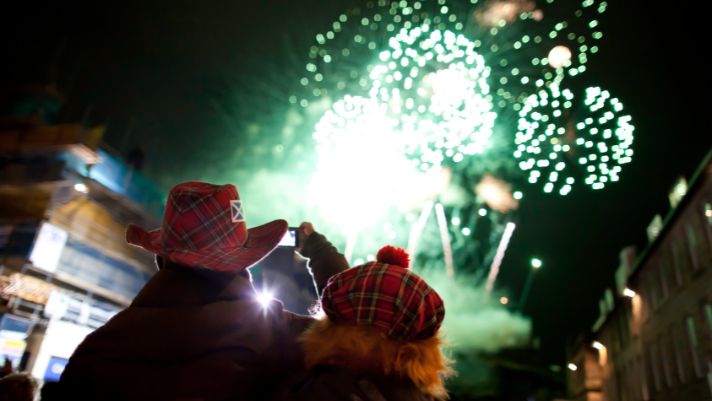
Origin and significance: In Scotland, New Year’s Eve is known as Hogmanay and is often a bigger celebration than Christmas. The origins stretch back to ancient winter festivals and Viking influences. Traditional customs include first-footing, where the first person to cross a home’s threshold after midnight brings symbolic gifts like coal or whisky for luck, and singing Robert Burns’s “Auld Lang Syne” as the old year ends and the new one begins.
Modern Hogmanay keeps these traditions alive alongside large public celebrations, fireworks, and street parties. It is a time for friendship, reflection, and starting the year with a full heart and a full glass.
How to experience it: Edinburgh’s Hogmanay is one of the world’s most famous New Year events. It usually runs for several days and features a torchlight procession, an outdoor ceilidh (traditional dance), live music, and a huge street party with fireworks over Edinburgh Castle at midnight. Tickets are required for many official events and often sell out, so advance planning is essential.
Across Scotland, smaller communities host their own Hogmanay celebrations, from bonfires and fire festivals to village dances and house parties. If you want to start the new year in a memorable way, there are few better places than Scotland, where strangers quickly turn into friends and everyone is invited to sing along.
Giant Lantern Festival in the Philippines: The City of Lights
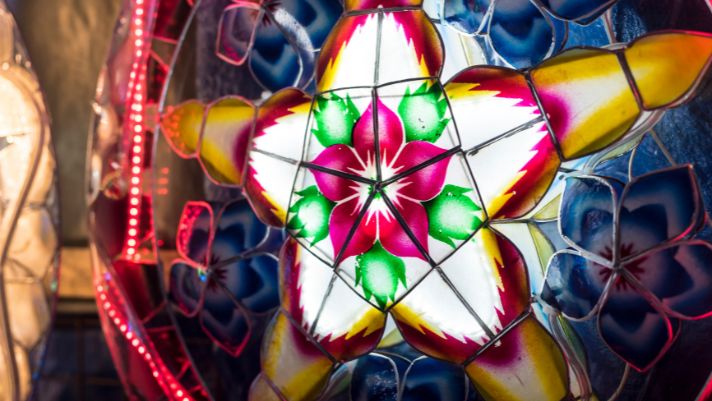
Origin and significance: In San Fernando, Pampanga, the Christmas season shines a little brighter. The city is known as the “Christmas Capital of the Philippines,” largely thanks to its annual Giant Lantern Festival, or Ligligan Parul.
What began as a local lantern tradition has grown into a spectacular competition. Neighborhoods build massive parols (traditional star-shaped lanterns) that can be as large as a small house. These lanterns are fitted with thousands of lights that turn on and off in elaborate, music-synced patterns, creating stunning kaleidoscopic displays. The festival celebrates craftsmanship, cooperation, and the Filipino love of colorful, joyful celebrations.
How to experience it: The main event is usually held on a Saturday in mid-December, often at a large open venue in San Fernando. From Manila, you can reach the city by car or bus in about an hour under normal traffic. Arrive early to explore food stalls and smaller displays, then find a place to watch the competition.
As each lantern is lit, the crowd falls quiet, then bursts into applause as the designs shift and pulse with the music. Even if you cannot attend on the main festival night, many lanterns remain on display for days afterward, and local tour operators sometimes offer special holiday trips to the area.
Bringing It All Together
From glowing lanterns in the Philippines to drums and feathers in Nassau, candlelit Swedish choirs to ancient stone circles in England, December and early January are full of celebrations that reflect the history and heart of each place.
As a traveler, you do not have to stand on the sidelines. You can drink mulled wine at a Christmas market, follow a posada procession by candlelight, watch the sun rise over Stonehenge, sing “Auld Lang Syne” in a Scottish crowd, or dance to Junkanoo rhythms until the sun comes up.
Wherever you go, approach each tradition with curiosity and respect. Ask questions, support local businesses, and say yes when someone invites you to join in. You will come home with more than photos. You will come back with stories, new perspectives, and memories that glow just as brightly as the holiday lights themselves.
Want to celebrate the holidays in a whole new way? A Personal Travel Advisor can help you plan a trip that brings you closer to global traditions and seasonal magic. Explore, connect, and create new memories with a holiday journey that goes beyond the ordinary.

)

