


Royal Caribbean Navigator of the Seas Review (2026 Guide)
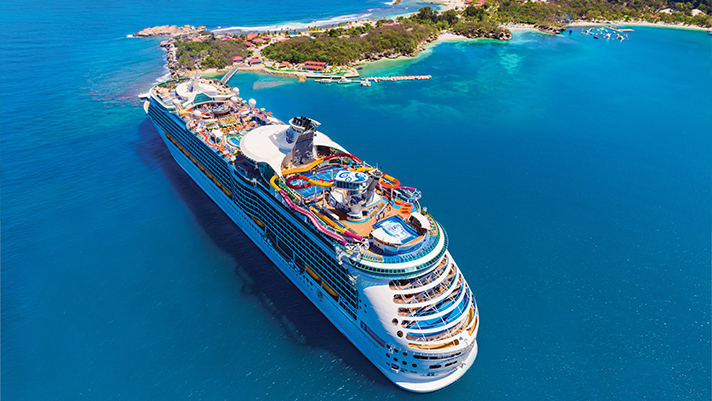
Navigator of the Seas is best understood as a short-vacation ship with a big-ship feel. Originally launched in 2002 as part of Royal Caribbean’s Voyager-Class, the ship was significantly updated during the 2019 “Royal Amplified” modernization. Today, it is positioned around high-energy weekends and weeklong Mexican Riviera sailings, with a new Southeast Asia season beginning in October 2026.
As of February 2026, Navigator operates in two distinct modes. The first is its West Coast program, offering three-night Ensenada sailings and seven-night Mexican Riviera itineraries from the Los Angeles area. The second begins in October 2026, when the ship debuts a Singapore homeport season featuring 3- to 12-night sailings throughout Southeast and East Asia.
From a value standpoint, Navigator appeals to travelers who want signature Royal Caribbean experiences such as FlowRider, waterslides, ice skating shows, laser tag, and an escape room, without committing to one of the line’s largest mega-ships. The tradeoff is tone. This is not designed as a quiet, spa-forward retreat. Even after modernization, some areas still reflect the ship’s original early-2000s design.
Want to experience Navigator of the Seas? Check out these short but sweet getaways departing from Los Angeles!
Avoya Travel’s Perspective
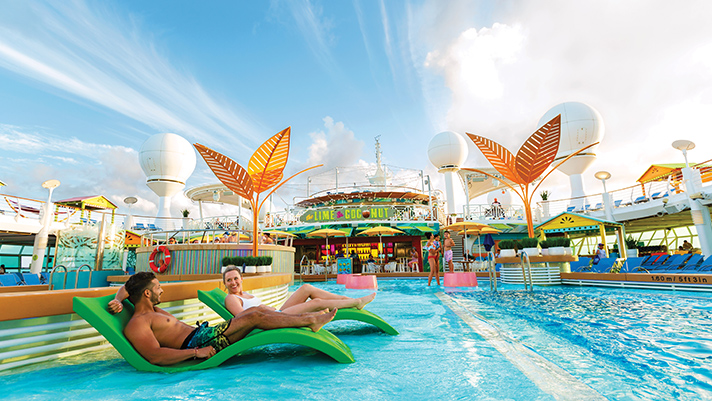
Avoya Travel previously highlighted five standout features on Navigator: the waterslides, the upgraded pool deck, dining variety, The Lime & Coconut, and the Royal Escape Room.
Those highlights remain accurate in 2026. What has changed is deployment. The ship continues to anchor short Mexican Riviera sailings, but it now adds a clearly defined Singapore season from October 2026 through February 2027. That expansion broadens its appeal beyond weekend West Coast cruising.
In practical terms, Navigator remains a “maximize your days” ship. If you board with a plan, especially on a 3- or 4-night sailing, you can experience a remarkable amount in a short window.
Navigator of the Seas Ship Size and Capacity
Navigator of the Seas occupies an interesting middle ground within the Royal Caribbean fleet. Originally launched in 2002, the ship reflects Voyager-class proportions, meaning it is large enough to feel like a full-scale resort but compact enough that you can cross from one end to the other without long transit times. After the 2019 “Royal Amplified” modernization, the ship’s public spaces were re-energized with high-demand attractions layered onto its existing structure.
Capacity is typically reported at just over 3,000 guests at double occupancy, with total capacity varying depending on cabin configuration. In practical terms, that places Navigator below the largest Oasis and Icon class ships, but comfortably above boutique or premium small-ship categories. The implication is operational rather than statistical: crowd patterns concentrate predictably around the pool deck, Royal Promenade, and sports deck, especially on sea days.
Navigator’s layout becomes much clearer when viewed through three primary public zones.
Deck 5, the Royal Promenade, functions as the social and commercial center. Cafés, bars, retail, and Guest Services cluster here, making it both a gathering space and a transit corridor. During evenings, this deck absorbs significant foot traffic, especially before and after shows.
Deck 11 houses the main pool areas, quick-service dining, Windjammer Café, and The Lime & Coconut. This is the highest-density area during daylight hours. On short sailings in particular, arriving early for loungers and staggering meal times makes a noticeable difference.
Deck 13 serves as the thrill deck, concentrating FlowRider, rock climbing, sports courts, and the waterslides. Weather, not demand, is often the limiting factor here. When conditions are favorable, this zone becomes one of the most active spaces onboard.
What truly differentiates Navigator within its size category is not its square footage but its density of attractions. The Blaster aqua coaster and Riptide headfirst mat racer are not peripheral features. They anchor the ship’s identity and reinforce its high-energy positioning.

What Does It Cost? A Practical Pricing Framework
Cruise pricing for Navigator of the Seas is dynamic and promotion-driven. Published “from” fares fluctuate based on season, cabin inventory, and promotional cycles. Observed pricing for a 7-night Mexican Riviera sailing in spring 2026 clustered around approximately $680 for interior cabins, $892 for ocean view, $1,136 for balcony, and $1,744 for suite accommodations, per person at double occupancy. Comparable Singapore-season sailings in late 2026 showed 4-night itineraries beginning in the low $700 range for interior cabins, with ocean view and balcony categories scaling upward accordingly.
Rather than anchoring to a single average, it is more useful to think in bands. 3- and 4-night sailings often advertise attractive entry-level fares, particularly outside of peak holidays. However, weekend departures and limited cabin inventory can drive quick increases. 7-night itineraries introduce more seasonal variation, with summer sailings and school-calendar windows typically commanding higher pricing, especially in balcony and suite categories.
The cruise fare generally includes onboard accommodations, standard dining venues such as the Main Dining Room and Windjammer Café, entertainment, and most daily activities. Dining at these venues is included with your cruise fare. Additional fees apply for select menu items and specialty restaurants. Add-on costs frequently include WiFi packages, beverage packages, specialty dining, and shore excursions. On Navigator, these extras can meaningfully influence total vacation spend because the ship actively promotes experience-based upgrades.
The most significant cost driver remains cabin category. Balcony cabins often command several hundred dollars more per person than interiors on the same sailing. On shorter itineraries, the value of a balcony is more subjective, as time onboard is compressed. On longer sailings with multiple sea days, the incremental value of private outdoor space increases.
Itineraries and Ports of Call
Navigator’s 2026 deployment divides into two clear geographic patterns.
On the West Coast, the ship operates short 3-night sailings to Ensenada and weeklong Mexican Riviera itineraries including ports such as Cabo San Lucas, Puerto Vallarta, and Mazatlan. The 3-night pattern typically includes one port day and one sea day, creating a ship-focused experience with a brief land interlude. The 7-night itineraries provide more balanced port exposure and sea time, making balcony cabins comparatively more compelling.
Tender ports, including Cabo San Lucas, introduce logistical considerations. Tendering requires additional transfer time between ship and shore. Travelers booking independent excursions should build in buffer time and remain attentive to ship time versus local time.
Beginning in October 2026, Navigator homeports in Singapore for a season running through February 2027. These itineraries range from three to 12 nights and include destinations such as Penang, Phuket, Langkawi, and, on select longer routes, additional regional ports. This deployment materially changes the planning framework. Flights, documentation requirements, and pre- and post-cruise logistics differ significantly from West Coast sailings.
The Asia season is not simply a repositioning footnote. It represents a strategic expansion of the ship’s market identity, pairing its high-energy design with new cultural and geographic contexts.

Navigator of the Seas Onboard Experience
Cabins
Navigator offers interior, ocean view, balcony, and suite accommodations. Interior cabins with Virtual Balcony technology project real-time exterior views onto a large screen, offering a sense of openness without the cost of a true balcony. For short sailings, this configuration can represent efficient value.
Balcony cabins become more attractive on itineraries with multiple sea days. The ability to step outside privately, especially during sailaway or sunset, often justifies the premium for travelers who prioritize personal space.
Suites introduce additional amenities and priority services that vary by suite tier. For travelers seeking a more insulated onboard experience, suites can mitigate some of the high-traffic dynamics in public areas.
Dining
Navigator’s dining program balances complimentary staples with specialty venues.
Dining at the Main Dining Room and Windjammer Café is included with your cruise fare. Casual options such as Café Promenade and El Loco Fresh also provide convenient access without additional cost.
Specialty restaurants, including steakhouse, Italian, seafood, and Japanese venues, require an additional fee. The availability of multiple specialty options on a shorter sailing can create a perception of expanded choice, but it also introduces discretionary spending decisions.
On a 3-night cruise, pre-planning dining reservations can prevent schedule compression. On longer sailings, flexibility increases.
Entertainment and Activities
Navigator blends traditional Royal Caribbean entertainment infrastructure with newer experiential programming. Large-scale productions take place in the main theater. Studio B hosts ice shows and other multi-use programming. The sports deck concentrates FlowRider, waterslides, and climbing walls.
The Royal Escape Room adds a bookable puzzle-based experience that requires advance planning due to limited capacity.
Because many headline attractions cluster within specific hours, reviewing daily schedules early in the sailing improves access. On shorter itineraries, this planning step is particularly important.
Wellness and Fitness
The Vitality at Sea spa and fitness center provide gym access and spa treatments. Fitness facilities are generally complimentary, while spa services carry an additional fee.
Sea day crowding patterns encourage strategic timing. Early morning gym visits and late-afternoon whirlpool use often provide a calmer atmosphere than midday.
Family Considerations
Navigator actively markets itself as family-friendly. Youth programming through Adventure Ocean, along with attraction-based entertainment such as waterslides and laser tag, reinforces this positioning.
On shorter cruises, families benefit from prioritizing key attractions early in the sailing. Waterslide hours, Studio B showtimes, and dining reservations can fill quickly.

How to Book and Get the Best Value
Booking Navigator of the Seas effectively requires clarity about itinerary mode first. West Coast Mexico sailings and Singapore-based Asia itineraries differ significantly in flight costs, documentation, and overall trip length. Deciding between those frameworks should precede cabin selection.
Deposit structures vary by sailing length and fare type. Royal Caribbean offers both refundable and nonrefundable deposit options. Travelers who anticipate monitoring pricing before final payment may prefer refundable structures for flexibility.
Pricing adjustments may be available before final payment, subject to cruise line terms and conditions. Monitoring fare changes during promotional windows can provide incremental savings.
Working with a personal travel advisor can assist in comparing cabin categories, sailing dates, and promotional structures across multiple departures. Avoya Travel provides cruise planning support and a Low Price Guarantee within a stated window after booking, along with no Avoya fees on cruises. For travelers who prefer guidance navigating promotional cycles and cabin selection, that layer of support can be valuable.
Conclusion
Navigator of the Seas remains a high-energy ship designed to maximize short windows of time. Its strongest use case continues to be weekend-style West Coast sailings and weeklong Mexican Riviera itineraries, now complemented by a clearly defined Singapore-based Asia season beginning October 2026.
The ship rewards travelers who value activity density over tranquility. With realistic expectations about add-on costs and peak-time crowding, Navigator can deliver strong value per day for families, friend groups, and travelers who prefer a cruise that feels full from embarkation to disembarkation rather than intentionally quiet.
Call the number at the top of this page to be connected with an Independent Travel Advisor in the Avoya Travel NetworkTM who can help you get the best price and answer any questions you have about Royal Caribbean.

)

